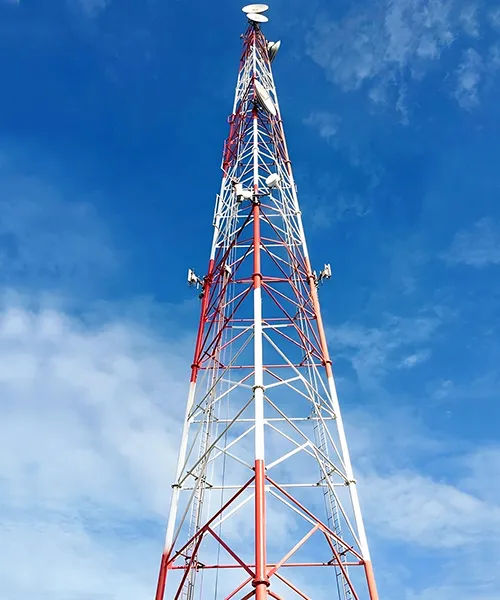
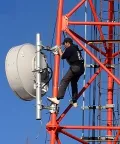
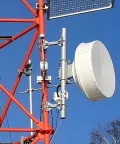
3-Legged Tubular Steel Communication Tower
Self-supporting towers made of tubular steel profile sections for use as telecommunication towers with heights ranging from 5 to 120 meters
3-legged tubular steel communication towers use circular steel tubes as the main structural material and follow a triangular layout. Their triangular layout helps spread the weight evenly and keeps the tubular communication tower stable under wind and normal operating conditions. These self-supporting towers are used for mobile communication and broadcasting projects, especially in locations that have limited space but require stable, long-term performance.
- Design Standards ANSI/TIA-222-G/H/F; EN 1991-1-4; EN 1993-3-1
- Height Range 5-120m, customizable to project needs
- Design Wind Speed Up to 300 km/h, according to site conditions
- Surface Treatment Hot-dip galvanized; Painting
- Structural Design
- Specifications
- Features
- Project
- Manufacturing
- Tower Structure
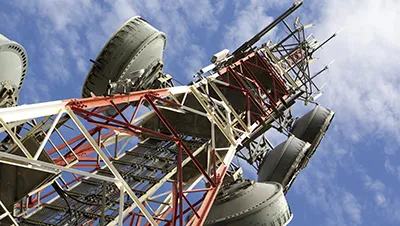
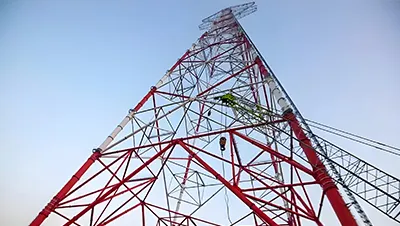
The tower is composed of tower foot, tower legs (made from seamless steel pipes or high-frequency welded pipes), horizontal members, diagonal bracing, climbing ladder, platforms, antenna brackets and a lightning rod. All components are connected using bolts, to ensure a stable triangular structure. - Material Characteristics
The main structural members use seamless steel pipes or welded steel pipes, while the horizontal and diagonal members can be made from steel angles or steel pipes. Precision molds are used to ensure interchangeability for mass production. - Foundation Design
With a three-leaf foundation, 3-legged tubular steel towers have a compact and lightweight base, which helps save on foundation costs and makes on-site work much easier.
Typical Installation Environments
3-legged tubular steel structures are suitable for suburban areas, small cities, and rural towns where land costs are lower and visual requirements are not strict. For better overall performance and easier installation, hilly and mountainous areas with lower wind pressure are preferred.
| Product | Telecommunication tower |
| Tower Type | Self-Supporting Tower |
| Design Standards | ANSI/TIA-222-G/H/F; EN 1991-1-4; EN 1993-3-1 |
| Certification | ISO 9001: 2015; COC; Third Party Inspection Report (SGS, BV) |
| Bolts & Fasteners | Grade 8.8 / 6.8 / 4.8; ASTM A325; DIN 7990, DIN 931, DIN 933; ISO 4032, ISO 4034 |
| Main Material | Tube steel |
| Height Range | 5-120m, customizable to project needs |
| Design Wind Speed | Up to 300 km/h, according to site conditions |
| Surface Treatment | Hot-dip galvanized; Painting |
| Galvanizing Standard | ASTM A123 / ISO 1461 |
| Expected Service Life | More than 20 years |
| Color Options | Silver (galvanized) or painted finish, RAL color system, customizable |
| Seismic Resistance | Up to 8° seismic intensity |
| Operating Temperature Range | −35°C to +45°C |
| Working & Rest Platforms | 1–3 pcs |
| Antenna Brackets | 3–18 pcs |
| Microwave Dish Brackets | 3–18 pcs |
| Main Features | Flange connections; steady structural performance |
| Certification Standard | ||
| Design Standards |
|
|
| Structural Steel | ||
| Grade | Mild Steel | High Tensile Steel |
| GB/T 700 – Q235B, Q235C, Q235D | GB/T 1591 – Q355B, Q355C, Q355D, Q420B | |
| ASTM A36 | ASTM A572 Gr.50 | |
| EN 10025 – S235JR, S235J0, S235J2 | EN 10025 – S355JR, S355J0, S355J2 | |
| Design Wind Speed | Up to 300 km/h | |
| Allowable deflection | 0.5–1.0° @ operational speed | |
| Tensile strength (MPa) | 360–510 | 470–630 |
| Yield strength (t ≤ 16 mm) (MPa) | 235 | 355 / 420 |
| Elongation (%) | 20 | 24 |
| Impact strength KV (J) | 27 (20°C) - Q235B (S235JR) | 27 (20°C) - Q355B (S355JR) |
| 27 (0°C) - Q235C (S235J0) | 27 (0°C) - Q355C (S355J0) | |
| 27 (-20°C) - Q235D (S235J2) | 27 (-20°C) - Q355D (S355J2) | |
| Bolts & Nuts | ||
| Grade | Grade 4.8, 6.8, 8.8 | |
| Standards for mechanical properties | ||
| Bolts | ISO 898-1 | |
| Nuts | ISO 898-2 | |
| Washers | ISO 7089 / DIN 125 / DIN 9021 | |
| Standards for dimensions | ||
| Bolts (dimensions) | DIN 7990, DIN 931, DIN 933 | |
| Nuts (dimensions) | ISO 4032, ISO 4034 | |
| Washers (dimensions) | DIN 7989, DIN 127B, ISO 7091 | |
| Welding | ||
| Method | CO₂ Shielded Arc Welding & Submerged Arc Welding (SAW) | |
| Standard | AWS D1.1 | |
| Galvanizing | ||
| Galvanization standard of steel sections | ISO 1461 or ASTM A123/A123M | |
| Galvanization standard of bolts and nuts | ISO 1461 or ASTM A153/A153M | |
Main Components
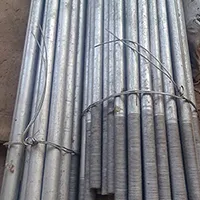 Anchor Bolts
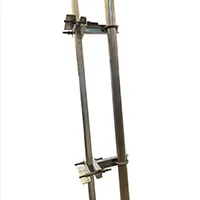 Antenna Mounting Bracket
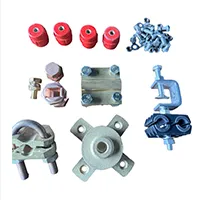 Copper Grounding Components
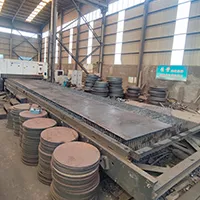 Connection Plates
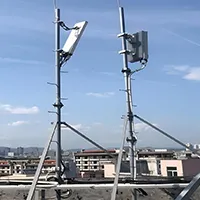 Antenna Mast
Optional Components
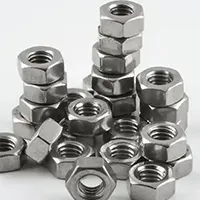 Communication Tower Bolts
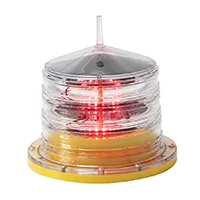 Aviation Obstruction Light
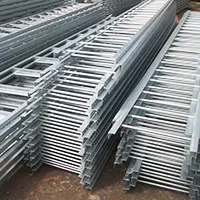 Climbing Ladder
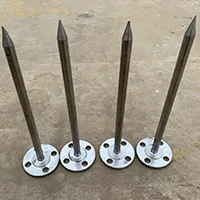 Copper Lightning Rod
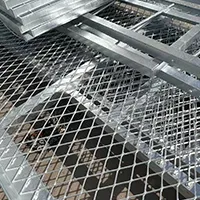 Grating Platform and Mesh Platform
We provide full technical guidance and carry out construction based on the approved drawings. If any questions arise, we are always available to assist.
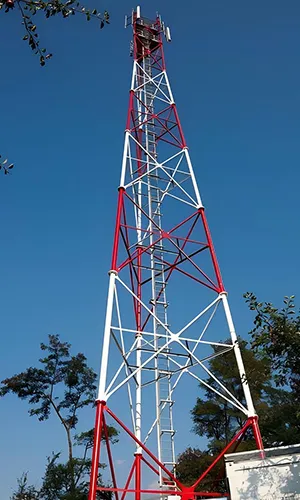
The three-leg triangular column layout optimizes the use of angle steel and helps reduce overall material consumption.
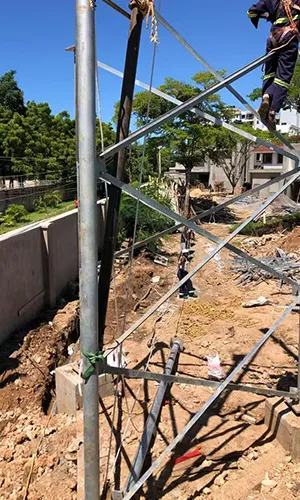
Its compact base width keeps land occupation to a minimum, which makes site selection more convenient and flexible.
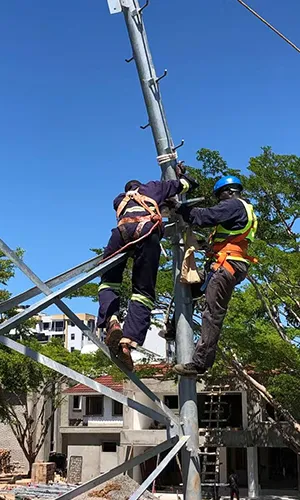
With a lightweight overall structure, less load is transferred to the foundation, helping reduce civil construction costs.
The lattice truss structural design makes transportation and on-site assembly easier, while also shortening the construction period.
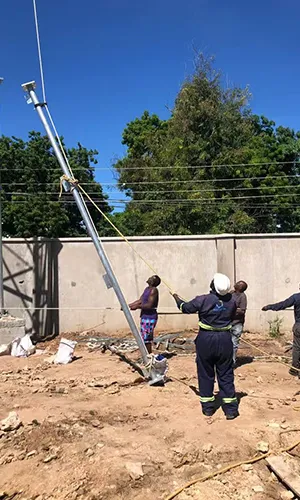
Designed according to wind load distribution, the structure can withstand wind speeds of up to 50 m/s and meets Seismic Intensity Level 8 requirements, with smooth and stable force transmission.
-
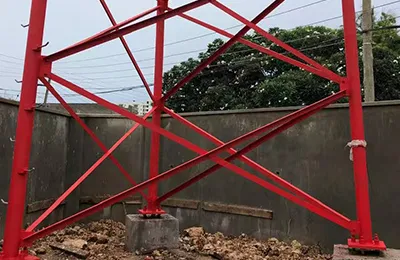 50m 3-Legged Tubular Steel Tower
 -
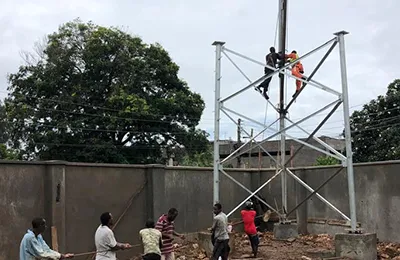 50m 3-Legged Tubular Steel Tower
 -
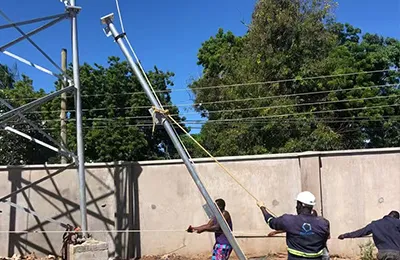 50m 3-Legged Tubular Steel Tower


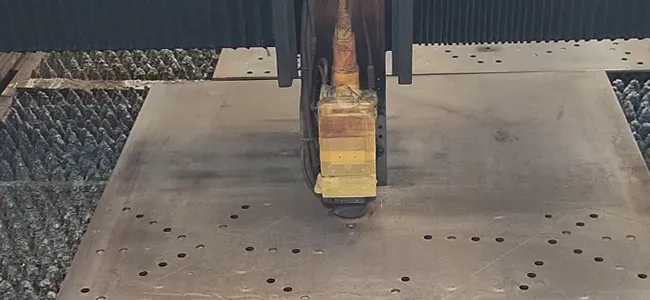
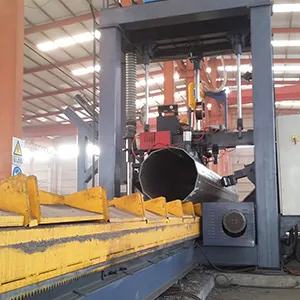
Laser Cutting
Laser cutting is used to shape the steel components through focused beam cutting and assisted gas removal. The process offers fast cutting speed and high dimensional accuracy (up to ±0.05 mm), while keeping heat impact to a minimum. This reduces the risk of deformation and results in clean, well-defined edges.
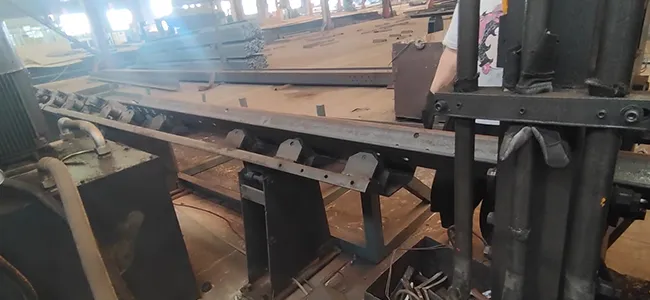
CNC Punching and Shearing
Steel angles are processed through CNC-controlled punching and shearing lines. Automatic feeding, positioning, punching, and cutting are all integrated into the process, keeping production running smoothly and efficiently. Precise CNC positioning keeps quality consistent, even when working with more complex parts.
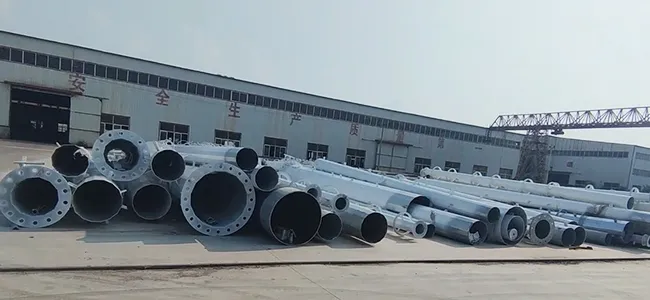
Hot-Dip Galvanizing and Surface Protection
The tower is protected with hot-dip galvanizing as the main anti-corrosion treatment, along with an extra plastic coating for added protection. The zinc layer protects the steel from rust and adds strength, while the coating gives extra insulation and surface protection. This combined treatment allows the tower to maintain reliable performance for over 20 years and adapt well to harsh environments such as high and low temperatures, coastal areas, and mountainous regions.
We also offer FRP antenna radomes and a wide range of accessories for telecommunication towers.